Motor Neuron Center
Secure Navigation Yellow Pages Reports & Forms Funding
Columbia University in the City of New York
About Us Members Events News & Features Monthly Meetings Seminar Series Jobs MNC Support

Although ALS and SMA are triggered by different mechanisms, many of which remain unknown, they have in common a progressive degeneration and death of motor neurons, the nerve cells responsible for muscle contraction.

The Motor Neuron Center will engage brilliant scientific minds in a translational approach to the study of the motor neuron. By taking new leads and tools from motor neuron biology, and testing and applying them to animal models of disease, as well as to clinical research in people, the Motor Neuron Center will facilitate the speedy transfer of research and preclinical findings to patients in the hope of finding effective therapy.

The Motor Neuron Center will create synergistic, large-scale programs for target discovery and functional analysis in an intellectual, collegial and stimulating environment.

Columbia University offers an unparalleled location for this initiative because it currently houses, in close proximity, world-class research and clinical groups. These include scientists engaged in the study of motor neuron development, relevant aspects of stem cell biology and animal models of both ALS and SMA. These scientists work with internationally renowned clinicians experienced in clinical trials for both diseases, eager to feed into their programs the latest findings from basic research and able to provide advice about the feasibility of therapeutic approaches for humans.

The Motor Neuron Center will also benefit from the wider environment in neuroscience research at Columbia. Indeed, it is the first major initiative of the Columbia University Center for Neuroscience Initiatives (CNI), a new center intended to foster collaboration of scientists in different disciplines and to bring together basic scientists, clinical researchers, and physicians in all campuses and schools of the University. One of the goals of the CNI is to develop and implement new programs that could accelerate the translation of fundamental discoveries of neuroscience research into new therapies for neurological and psychiatric disorders.


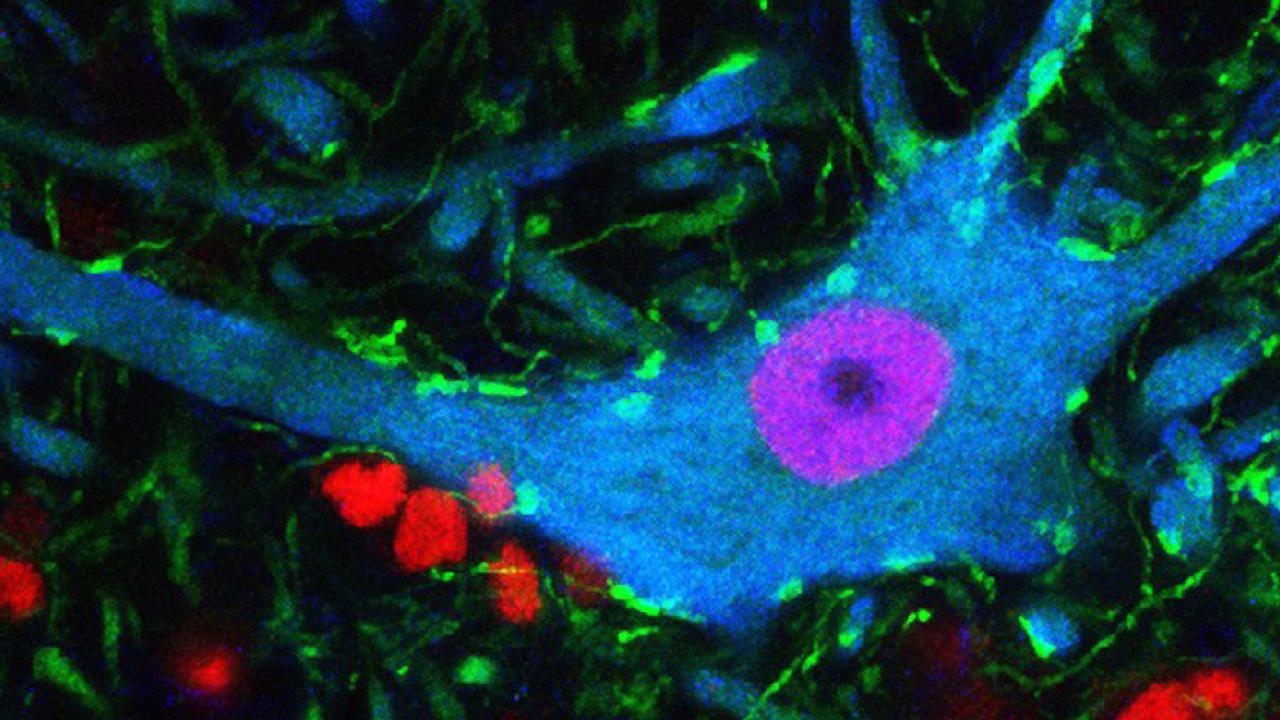
Science can help by simplifying the complex situation in the human spinal cord. By purifying motor neurons such as this one and growing them in culture, biologists have learned what keeps motor neurons alive and what makes them die, and have screened potential therapeutic drugs.