Motor Neuron Center
Secure Navigation Yellow Pages Reports & Forms Funding
Columbia University in the City of New York
About Us Members Events News & Features Monthly Meetings Seminar Series Jobs MNC Support
Russ Berrie Building
Room 504
Tel 212.851.5196
Email ak139@columbia.edu
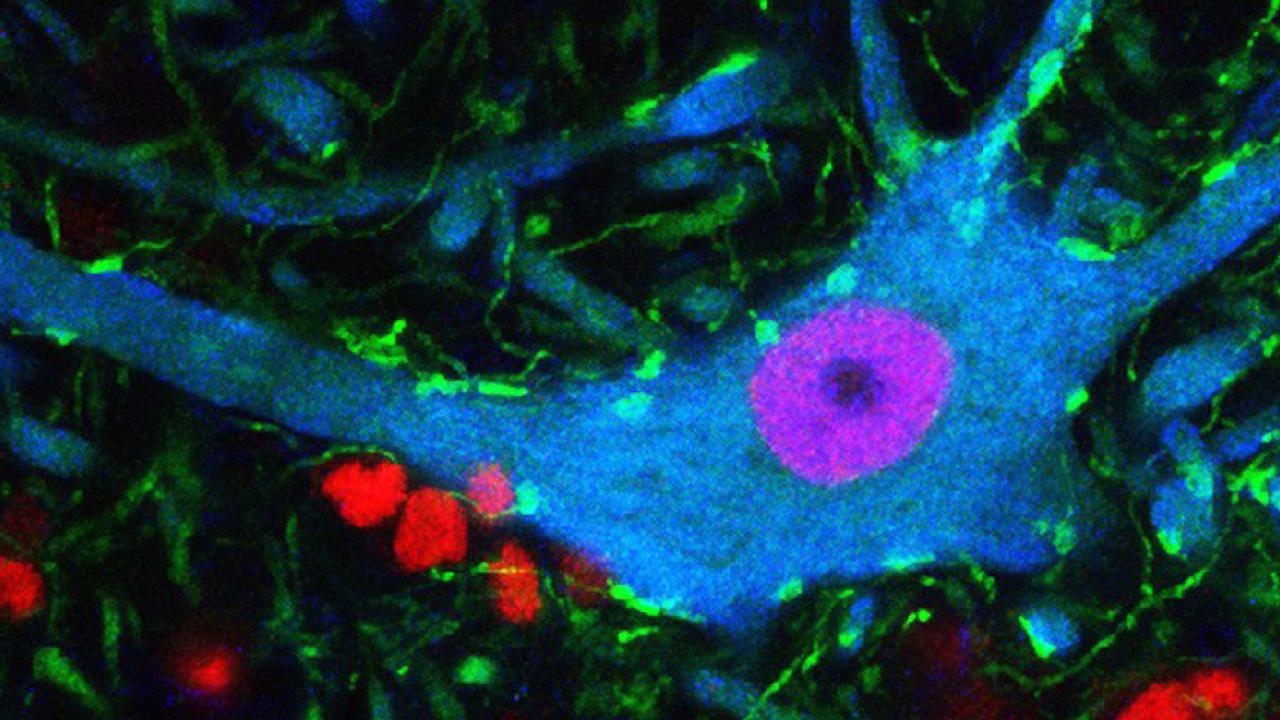
RESEARCH THEME: Regulation of Cellular Responses to Physiological Stress in Motor Neurons Our lab focuses on the study of the mechanisms, which sense and respond to physiological stress in neurons. A corruption of these processes is thought to occur early in the cascade of events that lead to the eventual neuro-degeneration observed in many neurological diseases. We hope that our research will contribute to develop novel pharmacological strategies that aim to protect vulnerable neurons from degeneration in pathological conditions. We used a candidate gene approach to model early aspects of motor neuron stress and dysfunction in mice. Wolframin (wfs1) is an endoplasmatic reticulum (ER) resident, transmembrane protein, which is involved in the regulation of intracellular Ca++ homeostasis and which is also essential for the mounting of a cell autonomous, physiological stress response. We produced mice with a genetic ablation of wfs1 in motor neurons. These mice develop a progressive neurological dysfunction cumulating in severe respiratory arrhythmia, muscle atrophy and premature death. Despite a partial denervation of somatic muscles we do not observe motor neuron loss in these mice. However, motor neurons in the absence of wfs1 have a marked dilation of the ER and exhibit cytoplasmic and ER invaginations into the cell nucleus. The cellular pathology indicates a persistent increase in cellular stress levels in motor neurons in the absence of wfs1. We will exploit this in vivo model of cellular motor neuron stress to investigate motor neuron specific stress response pathways. In particular our lab has begun to produce embryonal stem cells with homozygous ablations of wfs1 from which we will differentiate motor neurons in vitro. Wfs1 mutant and wild type, in vitro differentiated, motor neurons will serve as the cellular substrate for the biochemical and cell biological analysis of motor neuron specific stress response pathways. This work will help us to devise functional complementation assays for the high throughput selection of compounds, which are able to induce appropriate stress response pathways in vulnerable motor neurons under conditions of physiological and pathological cell stress.

BACKGROUND AND EDUCATION : Andreas Kottmann is an Assistant Professor of Neuroscience in the department of Psychiatry. He is also a faculty in the Genome Center, the New York State Psychiatric Institute and the Research Foundation for Mental Hygiene. He was a research bursar at the Imperial Cancer Research Fund in London and trained as a molecular immunologist with George Koehler at the Max Planck Institute for Immunobiology in Freiburg, Germany, from which he received his Ph.D. degree in 1991. He received post doctorial training in developmental neurobiology at the Center for Neurobiology and Behavior under the mentorship of Thomas M Jessell. Prior to becoming a faculty of Columbia University in 2003 he was the Vice President of Research of the Biotech and Contract Research Company PsychoGenics, Inc., which he joined in 1999 as the director of molecular biology research.

EDUCATION AND TRAINING:
1984-85 Research Bursar, Imperial Cancer Research Fund, London
1991 Ph.D., Max Planck Institute for Immunobiology and University of Freiburg, Germany
1993-99 Postdoctoral training, Center for Neurobiology and Behavior, Columbia University


IMAGE 1


Click image to enlarge.


IMAGE 2


Click image to enlarge.


IMAGE 3


Click image to enlarge.


IMAGE 4


Click image to enlarge.