Function of Cytoplasmic Dynein
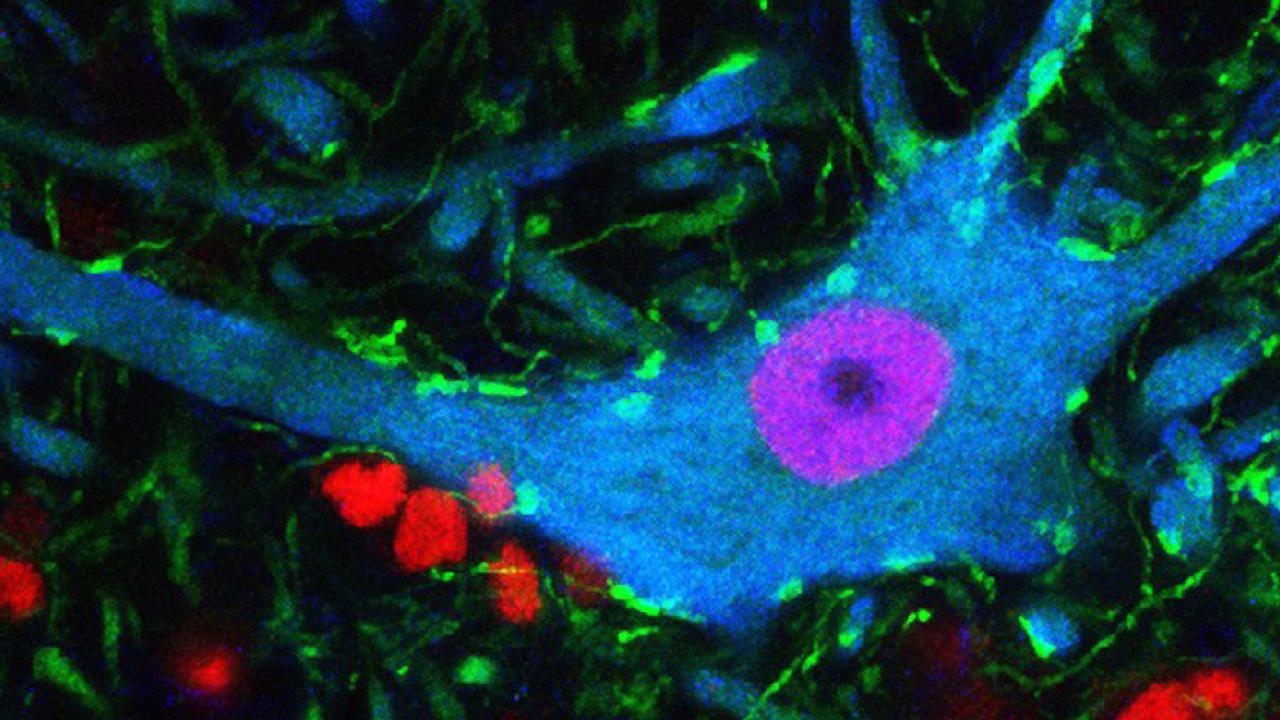
Research in my laboratory focuses on the microtubule motor protein cytoplasmic dynein. Recent evidence has indicated that mutations in cytoplasmic dynein and its accessory complex dynactin cause motor neuron degeneration in mouse and man. We are studying how cytoplasmic dynein function in order to understand its role in neurological disease as well as in normal cell behavior. The best known and best established neuronal role for cytoplasmic dynein is as the motor for retrograde axonal transport. Defects in this process are likely to affect neuronal behavior and viability, but how they contribute to late-onset neuronal degeneration is unknown. Recent work has indicated that cytoplasmic dynein is also involved in growth cone motility and neural progenitor cell migration, functions which do not appear to involve vesicular transport. We have recently found with D. Goldberg (Pharmacology) that, in growth cones subjected to acute laminin treatment, cytoplasmic dynein becomes concentrated at sites of neurite outgrowth. Interference with dynein function dramatically inhibits growth cone reorganization and neurite outgrowth. These effects appears to involve an association of dynein with the leading cortex of the growth cone, from which site it exerts force on microtubules and may affect their entry into nascent neurites. We have also been studying the role of dynein and its associated proteins in neural progenitor cell behavior with A. Kriegstein (UCSF). By using in utero electroporation we have found that RNAi for the dynein regulatory protein LIS1 dramatically alters radial migration from the ventricular surface to the cortical plate during brain development. By imaging live brain slices we found that several critical stages in the migration pathway were blocked. These data have revealed a role for LIS1 in interkinetic nuclear oscillations, axonal outgrowth, and glial-guided migration. The sites from which dynein functions in these forms of motility are under investigation.
Other work in the lab is directed at understanding basic questions of cytoplasmic dynein function. Dynein is a divergent member of the AAA ATPase family, evolutionarily unrelated to kinesin and myosin. However, only the most basic features of its structural organization and mechanism of force production are understood, and addressing these questions is one focus of the lab. How cytoplasmic dynein is targeted to diverse subcellular sites has also emerged as an important issue. The motor protein associates with a very wide range of subcellular structures, including retrogradely transported membrane vesicles, but also mitotic kinetochores, viruses, the cell cortex, and mRNA-containing particles. How dynein recognizes these structures specifically and in response to cell cycle or functional cues is largely unknown. Work to date has implicated dynactin in this function and, most recently, ZW10, a protein initially identified at the kinetochore. Work is continuing to understand its specific role in this aspect of dynein behavior.
Dr. Vallee is a Professor in the Department of Pathology and Cell Biology and Director of the Division of Cell and Molecular Biology. He is a member of Center for Neurobiology and Behavior and the Cancer Center. He received his B.A. from Swarthmore College and his Ph. D. degree from Yale University. He joined the faculty at Columbia University in 2002.
| 1974 |
Ph.D. Yale University |
| 1974-78 |
Postdoctoral Fellow, Lab. Molec. Biol., Univ. Wisconsin (with G. Borisy) |
| 1978-97 |
Staff, Senior, Principal Scientist, and Scientific Director, Worcester Foundation for Biomedical Research. |
| 1997-2001 |
Professor, Dept. of Cell Biology, Univ. Massachusetts Medical School. |
| 1974-77 |
NIH Postdoctoral Fellowship |
| 1984-88 |
Instructor, Physiology Course, Marine Biol. Lab., Woods Hole, MA |
| 1986, 1991, 1998 |
Series Editor, Methods in Enzymology, Vol. 134, 196, and 298. |
| 1989-93 |
ACS Advisory Committee on Cell and Molecular Biology |
| 1989-94 |
Editorial Board, Journal of Biological Chemistry |
| 1989-2001 |
Associate Editor, Cell Motil. Cytoskel. |
| 1991- |
Fellow, AAAS |
| 1996- |
NIH MERIT Award |
| 1998-2001 |
Council Delegate, AAAS |
| 1999-2001 |
H. Arthur Smith Chair in Cancer Research |
| 2005-2006 |
Program Committee, ASCB 2006 |
- Gee, M.A., Heuser, J. E., and Vallee, R.B. (1997) An Extended Microtubule-binding Structure within the Dynein Motor Domain Nature 390: 636-639.
- Faulkner, N. E., Dujardin, D. L., Tai, C.-Y., Vaughan, K. T., O'Connell, C. B., Wang, Y.-L., and Vallee, R. B. (2000) A Role for the Lissencephaly Gene LIS-1 in Mitosis and Cytoplasmic Dynein Function. Nature Cell Biol. 2: 784-791. (Cover)
- Dujardin, D. L., Barnhart, L. E., Stehman, S. A., Gomes, E., Gundersen, G. G., and Vallee, R. B. (2003) A Role for Cytoplasmic Dynein and LIS1 in Directed Cell Movement. J. Cell Biol. 163:1205-1211. (Cover)
- Hook, P., Mikami, A., Shafer, B., Chait, B., Rosenfeld, S., Vallee, R. B. (2005) Intrachain Regulation of Dynein ATPase Activity. J. Biol. Chem. 280:33,045-54.
- Tsai, J.-W., Chen, Y., Kriegstein, A, and Vallee, R. B. (2005) LIS1 RNAi Blocks Neural Stem Cell Division, Morphogenesis, and Motility at Multiple Stages. J. Cell Biol 170:935-45. (Cover)
|
 |
|