Motor Neuron Center
Secure Navigation Yellow Pages Reports & Forms Funding
Columbia University in the City of New York
About Us Members Events News & Features Monthly Meetings Seminar Series Jobs MNC Support
Physicians and Surgeons Building
Room 5-421, Mail Code #205
Tel 212.305.3046
Email lp2284@columbia.edu

RESEARCH THEME: Neuronal RNA metabolism and the molecular basis of Spinal Muscular Atrophy
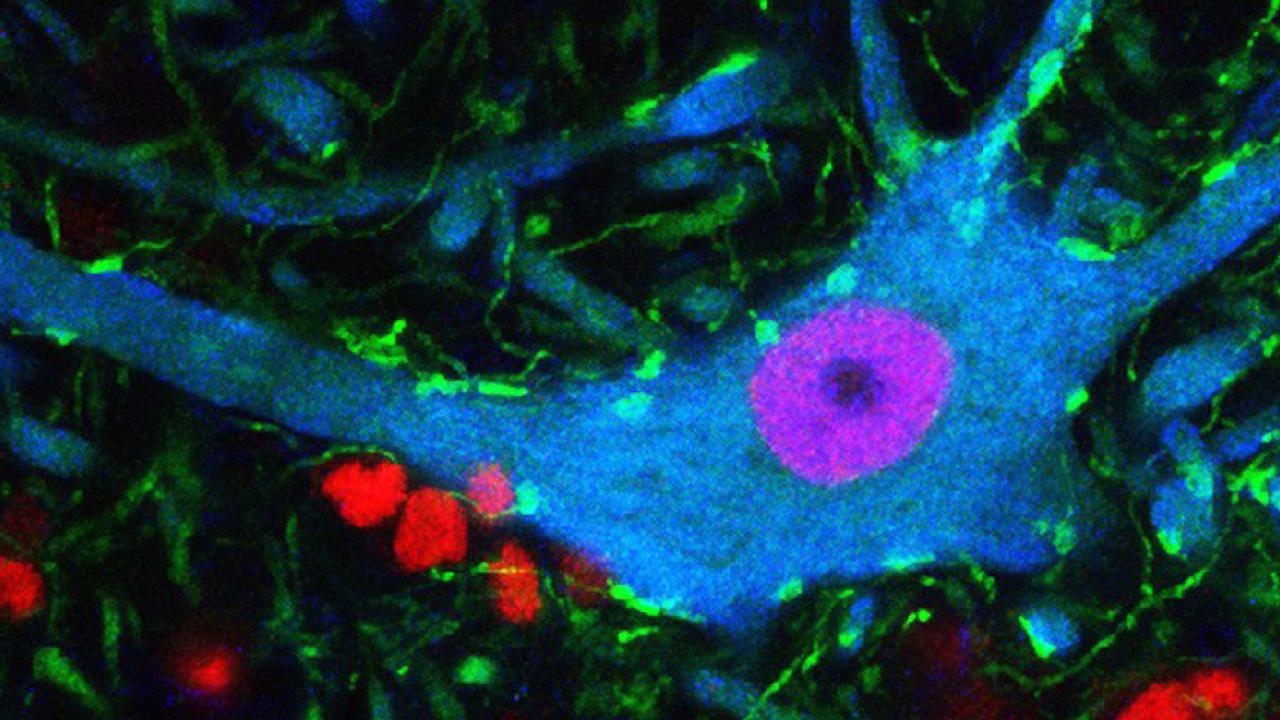
The pathway of mRNA biogenesis is essential for the temporal and spatial regulation of eukaryotic gene expression. Most post-transcriptional events of mRNA metabolism require ribonucleoprotein (RNP) complexes and occur within dynamic macromolecular assemblies. However, the elaborate networks of RNA-protein and protein-protein interactions that control mRNA metabolism at many levels are prone to errors. It is becoming clear that cells rely on the activity of protein chaperones to provide efficiency and fidelity to these macromolecular transactions in vivo and alterations in these processes are often implicated in the etiology of human neurological diseases. Research in my laboratory aims at understanding the biogenesis and function of RNP complexes as well as the role of RNA dysfunction in the pathophysiology of human motor neuron diseases. In particular we study the molecular functions of the survival motor neuron (SMN) protein. Reduced levels of SMN expression—due to homozygous deletions or mutations in the SMN1 gene—cause the inherited motor neuron disease spinal muscular atrophy (SMA), which is the leading genetic cause of death in infants. SMN is part of a macromolecular complex that functions in the biogenesis of small nuclear ribonucleoproteins (snRNPs)—the essential components of the pre-mRNA splicing machinery—as well as probably other RNPs. The SMN complex acts to increase the efficiency and specificity of RNP assembly, and to provide an opportunity for RNA-protein interactions to be regulated in vivo. Our recent findings that RNP assembly defects in the spinal cord of SMA mice correlate with disease severity and preferentially affect a subset of spliceosomal snRNPs strengthened the link between deficiencies in RNP metabolism and SMA pathology. However, there is a need for a more detailed understanding of the neuronal functions of SMN, the molecular consequences of impaired snRNP biogenesis and why alterations in these processes have particularly profound effects on motor neuron physiology. We employ biochemical and cell-biological tools to investigate the full spectrum of SMN activities in motor neurons and the consequence of SMN deficiency in animal and cellular model systems. Beyond providing fundamental insights into motor neuron biology, these efforts will help to unravel the molecular defects of SMA and will help the design of appropriate therapeutic strategies.

EDUCATION AND TRAINING: 1992    B.Sc. University of Rome La Sapienza, Italy
1995    Ph.D. University of Rome Tor Vergata, Italy
1996-2000    Postdoctoral Fellow, Howard Hughes Medical Institute, Philadelphia
2001-2002    Research Assistant Professor, University of Pennsylvania, Philadelphia
2003-2007    Group Leader, Dulbecco Telethon Institute (IBC/CNR), Rome, Italy
2007-    Assistant Professor, Columbia University, New York


HONORS AND AWARDS : 1992    Laurea Summa Cum Laude
2002    EMBO Young Investigator Award


SELECTED PUBLICATIONS : •    Pellizzoni L, Yong J, Dreyfuss G (2002). Essential role for the SMN complex in the specificity of snRNP assembly. Science 298: 1775-1779.

•    Gabanella F, Carissimi C, Usiello A, Pellizzoni L (2005). The activity of the Spinal Muscular Atrophy protein is regulated during development and cellular differentiation. Hum. Mol. Genet. 14: 3629-3642.

•    Carissimi C, Saieva L, Gabanella F, Pellizzoni L (2006). Gemin8 is required for the architecture and function of the Survival Motor Neuron complex. J. Biol. Chem. 281: 37009-37016.

•    Avila AM, Burnett BG, Taye AA, Gabanella F, Knight MA, Hartenstein P, Cizman Z, Di Prospero NA, Pellizzoni L, Fischbeck KH, Sumner CJ (2007). Trichostatin A increases SMN gene expression and survival in spinal muscular atrophy mice. J. Clin. Invest. 117: 659-671.

•    Pellizzoni L (2007). Chaperoning ribonucleoprotein biogenesis in health and disease. EMBO Rep. 8: 340-345.

•    Gabanella F, Butchbach MER, Saieva L, Carissimi C, Burghes AH, Pellizzoni L (2007). Ribonucleoprotein assembly defects correlate with spinal muscular atrophy severity and preferentially affect a subset of spliceosomal snRNPs. PLoS ONE 2, e921.